Thought leadership

MODERN ZULU WARRIOR

Characteristics & Key Traits

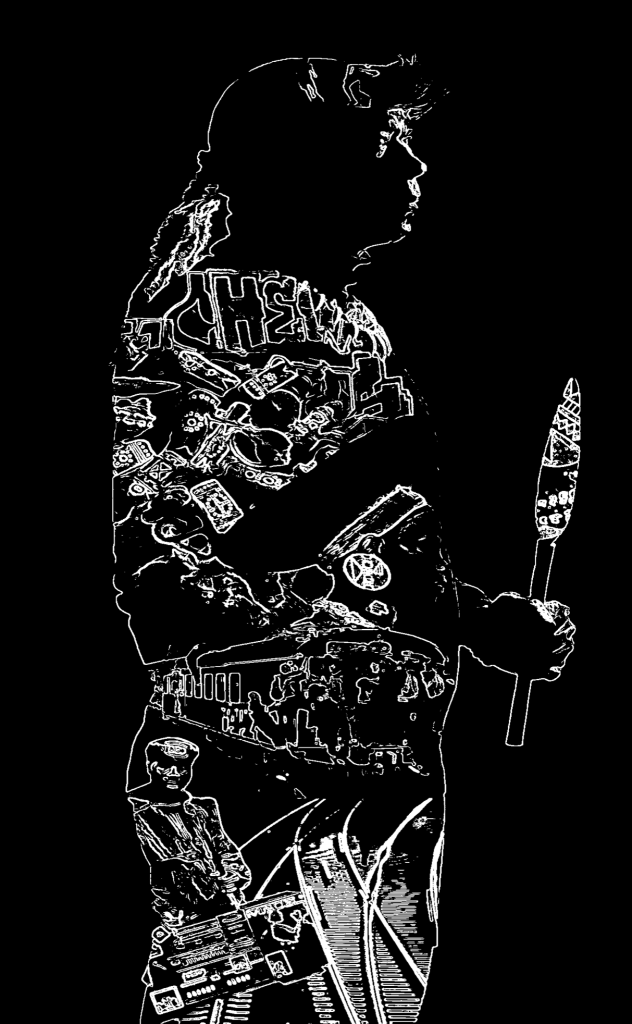
This archetype is both guardian and innovator: preserving ancestral memory, embodying discipline, and improvising creatively within modern contexts. They are ethically anchored, strategically insightful, and communally accountable. Whether navigating the streets, economic systems, or political landscapes, the Modern Zulu Warrior operates with courage, foresight, and unwavering dedication to collective flourishing.

MODERN ZULU WARRIOR

Practical Blueprint

A practical blueprint, anchored in the archetype of the Modern Zulu Warrior, fuses ancestral memory, Stoic discipline, and cultural improvisation as a guiding principle for twenty-first century South Africa. It is not a nostalgic return to the past, nor a blind adoption of modernity, but a disciplined synthesis that forges resilience, sovereignty, and ethical clarity in turbulent times.
Scroll to Top

Ancestral Consciousness

  • Rooted in Memory: Carries the wisdom, ethics, and stories of previous generations as guiding principles for decision-making.
  • Historical Foresight: Understands that present actions echo into future generations; evaluates choices through the lens of continuity and legacy.
  • Cultural Fluency: Fluent in African philosophical, musical, and communal traditions; understands their relevance in modern ethical, political, and economic contexts.

Ethical Mastery

  • Foresight: Anticipates consequences, systemic effects, and potential conflicts before taking action.
  • Moral Accountability: Recognizes that personal power is inseparable from responsibility to community and culture. 
  • Restraint as Strength: Exercises self-control, knowing that discipline in thought and action protects collective integrity.
  • Stewardship Mindset: Views leadership as custodianship rather than dominion; success is measured by the flourishing of the collective.

Courageous Improvisation

  • Adaptive Creativity: Responds to unpredictable situations with improvisation that is guided by principle, not impulse.
  • Cultural Mindset: Treats every interaction, negotiation, or performance as a rehearsal in accountability, rhythm, and moral navigation. 
  • Strategic Risk-Taking: Courage is calculated; boldness is harmonized with foresight and ethics.

Strategic Intelligence

  • Systems Thinking: Sees the interplay between social, economic, political, and cultural structures; navigates complexity with clarity.
  • Discernment of Power: Recognizes both visible and hidden structures of influence—political, economic, and ideological—and acts accordingly. 
  • Long-Term Planning: Prioritizes intergenerational impact over immediate gains, balancing ambition with prudence.

Communal Orientation

  • Ubuntu-Centered Leadership: Embeds respect, solidarity, and reciprocity in all interactions; understands that individual success is inseparable from collective well-being.
  • Mentorship and Legacy Building: Invests in developing successors, ensuring knowledge, ethics, and skills are transmitted.
  • Ethical Peer Accountability: Engages in communal councils, ciphers, or assemblies where every voice is heard, and moral responsibility is enforced collectively.

Resilience and Endurance

  • Emotional Fortitude: Maintains composure under duress, resisting fear, frustration, and distraction.
  • Persistent Discipline: Upholds routines, practice, and reflection as a form of moral and strategic conditioning. 
  • Recovery and Adaptation: Learns from setbacks without succumbing to despair; failure is a rehearsal, not a verdict.

Narrative and Symbolic Intelligence

  • Mastery of Storytelling: Communicates lessons, strategy, and ethics through narrative, music, and metaphor, influencing both peers and wider society.
  • Counter-Propaganda Skills: Recognizes disinformation, manipulates symbols responsibly, and preserves memory and integrity against ideological capture.
  • Symbolic Creativity: Uses art, ritual, and performance as instruments of ethical rehearsal and cultural transmission.

Spiritual and Reflective Depth

  • Clairvoyant Intuition: Heightened awareness of systemic patterns and human behaviour; anticipates outcomes beyond immediate perception.
  • Meditative Discipline: Practices reflection, prayer, or mindful rehearsal to calibrate judgment and maintain alignment with values. 
  • Integration of Mind, Body, and Spirit: Balances physical presence, mental acuity, and moral awareness in all undertakings.

Reclaiming Identity: Embodying the Warrior’s Consciousness

Objective

To establish identity as a prerequisite for sovereignty, grounded in historical awareness, cultural literacy, and ethical self-recognition. The modern Zulu warrior must know not only the lineage of the past but also the values that shape action in the present, forging a consciousness that resists assimilation, disinformation, and erasure.

Strategies

Memory as Weapon and Shield

  1. Living Archives: Collect oral histories, liberation songs, praise poetry, and community testimonies, weaving them into multimedia archives accessible to schools, cultural centers, and digital platforms.
  2. Ethical Compass: Memory serves both as shield (protecting against cultural loss) and as weapon (arming communities with narratives that resist exploitation and distortion).
  3. Shared Storytelling: Intergenerational storytelling sessions ensure that memory is not frozen in books but embodied in relationships.

Rites of Reflection

  1. Mentorship as Initiation: Establish structured mentorship and apprenticeship programs where elders, artisans, and cultural leaders induct youth into both practical skills and ethical reasoning.
  2. Ethical Challenges: Just as warriors faced trials before joining regiments, young leaders undergo guided reflection exercises—confronting dilemmas, improvising solutions, and being held accountable by peers.
  3. Embodied Responsibility: These rites transform identity from an abstract label into lived practice, shaping citizens who understand their responsibility to both community and future generations.

Rhythm of Responsibility

  1. Imbizos: A platform for collective dialogue, where ordinary community members could voice concerns, contribute ideas, and participate in shaping decisions. A space marked by accountability and transparency, reinforcing the principle that leadership exists in relationship with the people.
  2. Storytelling Arenas: Weekly or seasonal gatherings where moral, historical, and cultural stories are rehearsed and contested in dialogue. Host open circles for ukuhasha, rap, spoken word, and traditional performance, where youth and elders share insights in creative form.
  3. Artistic Practice: Music, dance, theatre, and visual arts serve as spaces of ethical rehearsal—teaching courage, empathy, and resilience through performance.

Expected Outcomes

  1. A generation rooted in historical literacy and cultural pride.
  2. Identity becomes an active practice rather than passive inheritance.
  3. Communities strengthened by a shared rhythm of memory, ritual, and responsibility.
  4. A warrior consciousness capable of navigating modern challenges without severing ancestral roots.

Restoring African Values: Ethical Architecture in Action

Objective

To embed ethical frameworks into every level of governance, enterprise, and community life, ensuring that decisions reinforce long-term social cohesion, dignity, and collective flourishing. This pillar recognizes that without values as architecture, systems collapse into corruption, predation, and short-term opportunism.

Strategies

Codifying Ethical Protocols

  1. Ubuntu (mutual humanity): Decisions must reflect interdependence and shared wellbeing.
  2. Inhlonipho (respect): Interactions, from boardrooms to village councils, are guided by dignity and humility.
  3. Isibindi (courage): Ethical action requires bravery in resisting exploitation, speaking truth, and protecting the vulnerable.
  4. Umsebenzi (duty/service): Leadership is reframed as stewardship, with work measured not by accumulation but by contribution.

By translating these principles into operational codes for organizations, public offices, and community councils, African values become living governance systems rather than symbolic rhetoric.

Ethical Audits

  1. Ancestral Standards: Policies and projects are evaluated against wisdom traditions and intergenerational responsibility.
  2. Communal Standards: Communities assess whether decisions promote justice, access, and participation.
  3. Long-Term Standards: Every policy or enterprise is judged by its impact on the seventh generation, not just quarterly gains.

Regular ethical audits ensure that misalignment is identified early, corrected collectively, and prevented from metastasizing into systemic dysfunction.

Expected Outcomes

  1. Governance and enterprise guided by ethical clarity rather than opportunism.
  2. Communities shielded from corruption through participatory oversight.
  3. African values codified as practical frameworks for modern institutions.
  4. Leaders and citizens alike embodying a warrior’s ethos: courageous, disciplined, respectful, and service-driven

Preserving Heritage

Objective

To safeguard and revitalize cultural memory, indigenous knowledge, and artistic traditions as living resources that inform the modern Zulu warrior’s path. Heritage is not nostalgia but strategy: a shield against erasure, a compass for ethical action, and a foundation for resilient identity in a globalized world.

Strategies

Living Archives

Heritage must be documented and activated:

  1. Oral histories recorded from elders and shared digitally with youth.
  2. Archives that integrate song, ritual, poetry, and craftsmanship alongside written records.
  3. Community museums and cultural hubs serving as centers for both preservation and innovation.

Ritual as Rehearsal

Ritual is not just sacred memory but training for resilience:

  1. Seasonal ceremonies linked to planting, harvesting, or migration cycles remind communities of ecological interdependence.
  2. Warrior rites adapted for modern contexts — initiation through service projects, community defense, or cultural stewardship.
  3. Performance arts (dance, music, theatre) as methods of embodying history and transmitting values.

Sacred Sites & Spaces

Protecting heritage also means guarding land and spiritual sites:
  1. Reclaim and restore ancestral graves, mountains, and rivers as places of memory and prayer.
  2. Designate cultural landscapes (e.g., battlegrounds, homesteads, regimental sites) as protected commons.
  3. Encourage sustainable tourism that educates rather than commodifies.

Intergenerational Knowledge Transfer

  1. Create mentorship circles pairing elders and youth in crafts, storytelling, and ecological knowledge.
  2. Integrate indigenous wisdom into schools, not as an afterthought but as a foundation for sciences, ethics, and leadership.
  3. Use digital tools (apps, podcasts, films) to carry heritage into global conversations without diluting its essence.

Expected Outcomes

  1. Heritage becomes a living compass, not a museum artifact.
  2. Youth are empowered with identity and pride, resisting cultural erosion.
  3. Community solidarity is deepened through shared rituals and narratives.
  4. Land and sacred spaces are defended as repositories of memory and meaning.

Reclaiming Identity: Embodying the Warrior’s Consciousness

Objective

To develop adaptive and anticipatory systems that mirror the rhythm, discipline, and improvisation of both ancestral regimental practice and modern strategic planning. The modern Zulu warrior must learn to see beyond the immediate horizon, preparing for disruption with clarity, agility, and ethical resolve.

Strategies

Scenario Drills

  1. Crisis Rehearsals: Communities, governments, and enterprises run simulations of political instability, economic downturns, health pandemics, and climate shocks.
  2. Regimental Discipline: Just as Shaka’s warriors rehearsed formations repeatedly, modern planners cultivate reflexes that allow for rapid, coordinated responses under pressure.
  3. Ethical Stress Tests: Beyond logistics, these drills test whether decisions uphold Ubuntu and communal solidarity in moments of strain.

Counter-Propaganda Protocols

  1. Narrative Literacy: Teach citizens to critically interpret media, rhetoric, and symbolic manipulation.
  2. Fact-Checking Units: Community-based truth circles and digital watchdog groups that verify claims and expose disinformation.
  3. Memory Preservation: Oral history projects, cultural performances, and archives protect against ideological capture by anchoring society in its own narrative.

Adaptive Decision-Making

  1. Modular Policies: Build governance and enterprise frameworks that can be adjusted without collapsing, allowing for course correction in real time.
  2. Iterative Cycles: Policies are reviewed, tested, and refined continuously—mirroring the improvisational creativity of drum circles or praise poetry.
  3. Ethical Anchoring: Even as decisions shift with changing conditions, their foundation remains rooted in African principles of respect, responsibility, and collective flourishing.

Expected Outcomes

  1. A society with the resilient reflexes to withstand and adapt to systemic shocks.
  2. Communities inoculated against disinformation through narrative sovereignty.
  3. Institutions capable of adjusting strategies while maintaining ethical integrity.
  4. Leaders and citizens trained in foresight, embodying the warrior’s discipline of preparedness without paranoia.

Rebuilding the Economy: Stewardship over Predation

Objective

To transition from exploitative, short-term extractive systems toward an Ubuntu-informed economy rooted in stewardship, foresight, courage, and ethical improvisation. This model positions the modern Zulu warrior as a custodian of resources, ensuring wealth is generated, shared, and sustained without sacrificing the dignity of people or the integrity of the land.

Strategies

The Warrior’s Ledger

 Every economic action—whether corporate investment, public spending, or entrepreneurship—must pass through a triple filter:

  1. Generational Impact: Does this action preserve and strengthen opportunities for future generations?
  2. Ethical Integrity: Does it align with justice, transparency, and fairness?
  3. Communal Benefit: Does it uplift the collective rather than enrich only the few?

This ledger becomes a cultural compass, holding leaders accountable and embedding values of accountability and reciprocity into everyday transactions.

Collective Defense of Resources

Communities must actively guard their resources from exploitation by external forces or internal corruption:

  1. Cooperatives: Shared ownership models in agriculture, housing, manufacturing, and retail ensure value remains local.
  2. Ethical Investment Funds: Pool savings and direct them into enterprises aligned with sustainability and social impact.
  3. Community-Owned Enterprises: From renewable energy hubs to local food markets, these structures protect against predatory capture and foster resilient wealth creation.

The modern warrior leads not through conquest, but through defending economic sovereignty and cultivating prosperity that cannot be easily stripped away.

Foresight Simulations

 Just as Shaka kaSenzangakhona trained regiments to rehearse formations and anticipate counterattacks, modern economic stewards must prepare for disruption:

  1. Scenario Planning: Map out best-case, worst-case, and most-likely outcomes of policies or investments.
  2. Feedback Loops: Build systems that can adapt quickly to climate shifts, technological disruptions, and market volatility.
  3. Community Rehearsals: Use participatory workshops where citizens role-play responses to crises (food shortages, energy blackouts, financial shocks).

Expected Outcomes

  1. A shift from dependency to economic self-determination.
  2. Greater local wealth retention through cooperative and community-owned systems.
  3. Stronger resilience against systemic shocks (financial, ecological, political).
  4. An economy that embodies Ubuntu: where the prosperity of one is inseparable from the wellbeing of the many.

Rebuilding the Economy: Stewardship over Predation

Objective

Equip the modern Zulu warrior with practical, culturally rooted tools to build resilient, self-reliant, and regenerative communities — places where ecological stewardship, economic dignity, and cultural vitality are passed to the next generation.

Guiding values

  1. Ubuntu in action: mutual care and shared responsibility.
  2. Kusimama (sustainability): long-term thinking in social, economic and environmental choices.
  3. Respect for place: traditional ecological knowledge combined with modern best practice.
  4. Courage with compassion: leadership that protects and empowers, not dominates.

Core pillars

Food sovereignty — community gardens, indigenous crops, seed saving, agroecology.

Energy resilience — distributed clean energy (solar microgrids, biogas), local maintenance skills.

Water stewardship — rain capture, greywater reuse, wetland restoration and clean supply governance.

Circular economy — repair culture, local manufacturing, waste-to-resource programs.

Health & wellbeing — preventive public health, mental health support, traditional medicine integrated with primary care.

Cultural & educational transmission — story, song, craft and history as everyday curricula.

Participatory governance — councils that include elders, youth, and women; transparent decision-making.

Practical strategies

  1. Map community assets (people, skills, land, water).
  2. Start pilot projects: a community garden, a solar hub, and a skills co-op.
  3. Teach trades: carpentry, plumbing, solar installation, seed stewardship.
  4. Use rites and regular gatherings to pass values — e.g., seasonal harvest ceremonies that double as planning sessions.
  5. Create local currency or time-banking to keep value circulating.
  6. Train rapid-response teams for climate shocks and social conflicts.

Roles within the community

  1. Warrior-guardian: safety, conflict resolution, disaster response.
  2. Steward-elder: custodian of traditional knowledge and environmental practice.
  3. Innovator: adapts new technologies to local contexts.
  4. Healer: health facilitator blending modern and traditional practice.
  5. Youth catalysts: apprentices who run projects, bringing energy and fresh ideas.

Roles within the community

  1. Morning communal work circles (land tending, teaching).
  2. Weekly knowledge-sharing nights (songs, stories, trainings).
  3. Seasonal planning aligned with planting/harvest and cultural calendar.
  4. Public accountability sessions to monitor resource use and project results.

Metrics of success (what matters)

  1. Number of households with reliable food and energy.
  2. Local employment and skills retention rates.
  3. Biodiversity and soil health indicators.
  4. Participation rates across ages and genders.
  5. Cultural practices actively taught and performed.